Water and Wastewater Treatment: Technological Systems and Practical Approaches for Efficient Enterprise Management.
As a core resource for industrial production, the recycling and pollution control of water are directly related to the level of enterprises’ green development. Against the backdrop of increasingly stringent environmental regulations and the deepening of the green and low-carbon concept, enterprise sewage treatment has shifted from traditional compliance discharge to an integrated management and control model characterized by high efficiency, refinement, and resource utilization. Constructing a full-process technical closed loop of “precision monitoring – intelligent regulation – data support” is the core logic for achieving efficient sewage treatment. Among them, the collaborative application of three key types of equipment—flow meters, quantitative control boxes, and data loggers—and scientific selection based on process scenarios constitute the core support of this technical system.
1. Product Application Scenarios, Usage Types, and Where Flow Meters Are Required.
As a core sensing device in the entire sewage treatment process, flow meters cover all key links from raw water intake to effluent discharge/reclaimed water reuse. Different scenarios correspond to suitable equipment types, and core application locations are closely bound to process links, forming a precise matching system of “scenario – type – location”.
1.1 Classification of Core Application Scenarios.
Combined with the sewage treatment process, the core application scenarios of flow meters can be divided into seven categories, fully covering the entire treatment chain. The specific process requirements and core objectives of flow measurement for each scenario are as follows:
(1) Raw water intake and transportation link: The core requirement is to measure the total amount of raw water extracted from rivers, lakes, reservoirs, or groundwater wells, and simultaneously monitor the flow rate in the transportation pipeline to prevent excessive water intake, pipeline blockage, or leakage;
(2) Pretreatment link: Covering three core sub-links of coagulation/flocculation, sedimentation tank/clarifier, and filtration, the core requirement is to ensure stable pretreatment effect and lay a foundation for subsequent treatment;
(3) Advanced treatment link: Mainly serving high-standard water quality demand scenarios such as drinking water advanced treatment and industrial pure water preparation, the core requirement is to ensure that the effluent water quality meets standards and protect the safety of core treatment equipment;
(4) Disinfection link: The core requirement is to balance the sterilization effect and secondary pollution risk, ensuring sufficient disinfection and compliance of disinfectant residues;
(5) Sludge treatment link: The core requirement is to stabilize the operation of the biochemical system, optimize sludge dewatering efficiency, and reduce sludge disposal costs;
(6) Reclaimed water reuse/effluent discharge link: The core requirement is to support the statistics of water resource recycling and the monitoring of environmentally compliant discharge;
(7) Full-process chemical dosing system: The core requirement is to achieve precise proportional dosing of various chemicals with the main water flow, ensuring treatment effect and controlling operating costs. All scenarios revolve around the core demand of “precision flow sensing” to serve the achievement of different process objectives.
1.2 Suitable Usage Types.
Based on the medium characteristics, flow state, and installation conditions of different scenarios, the selection logic of flow meter types is clear. The commonly used types for each scenario are as follows:
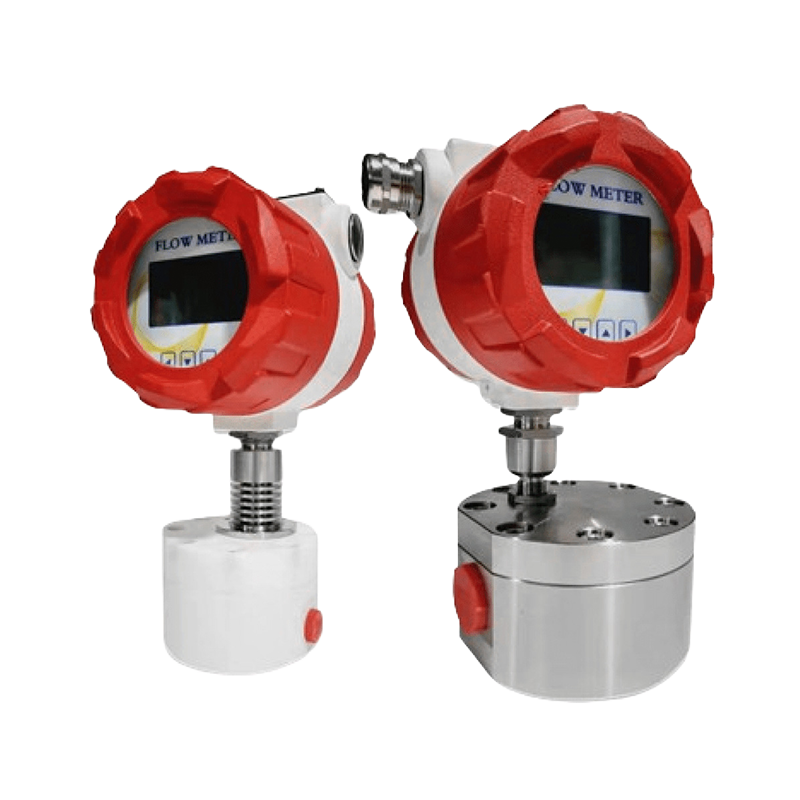
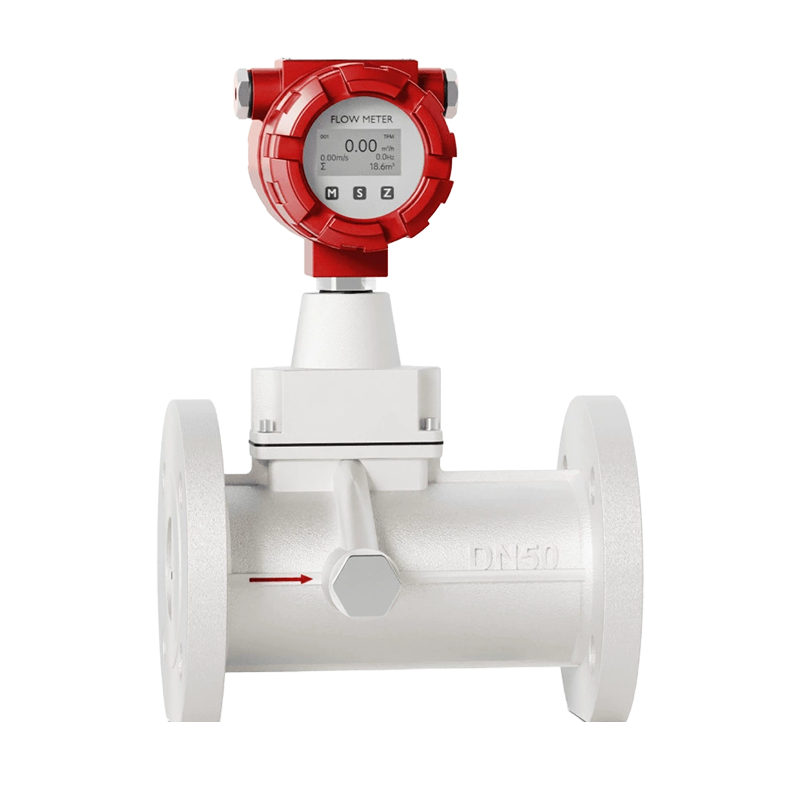
(1) Raw water intake and transportation link: Electromagnetic flow meters, ultrasonic flow meters, and vortex flow meters are commonly used, among which vortex flow meters are suitable for flow monitoring of clean raw water;
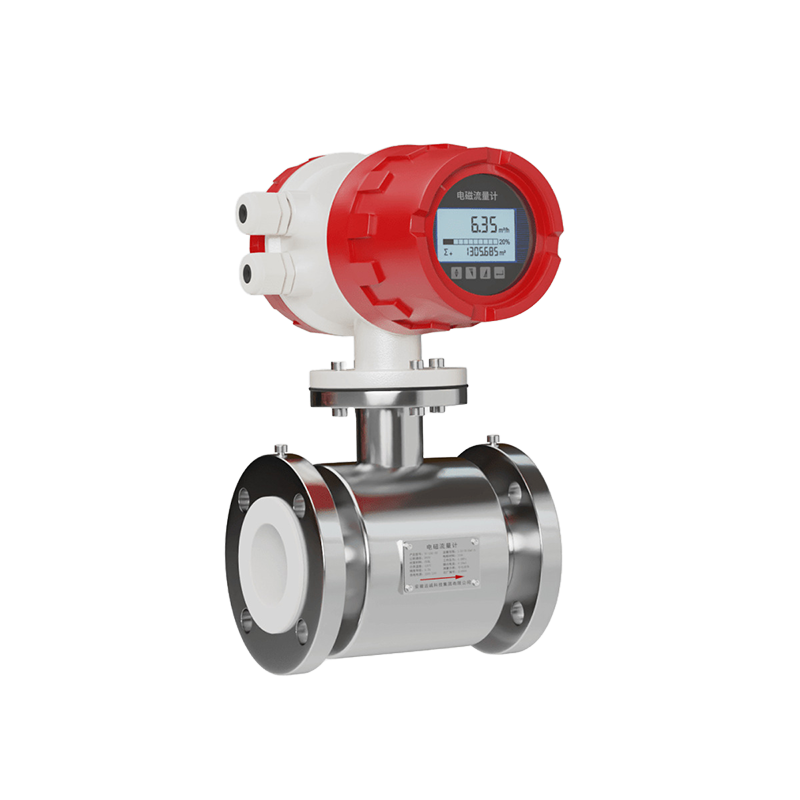
(2) Pretreatment link: Electromagnetic flow meters are the mainstream choice, suitable for sewage systems containing a small amount of suspended impurities, and can accurately measure raw water and chemical flow rates;
(3) Advanced treatment link: Electromagnetic flow meters are mainly used. High-precision electromagnetic flow meters can be matched at the inlets and outlets of core equipment such as reverse osmosis (RO)/nanofiltration (NF) systems, and corrosion-resistant electromagnetic flow meters are suitable for ozone dosing links;
(4) Disinfection link: Electromagnetic flow meters are adopted, which can accurately measure the disinfectant dosing flow rate and adapt to the medium characteristics of various disinfectants;
(5) Sludge treatment link: Anti-clogging electromagnetic flow meters are selected, suitable for sludge media with high solid content;
(6) Reclaimed water reuse/effluent discharge link: Both electromagnetic flow meters and ultrasonic flow meters can be used, and ultrasonic flow meters are preferred for large-diameter discharge pipelines;
(7) Full-process chemical dosing system: Corresponding electromagnetic flow meters are selected according to chemical characteristics, and corrosion-resistant linings and electrode electromagnetic flow meters are suitable for corrosive chemicals.
In addition, the general matching logic is as follows: Due to the characteristics of no flow obstruction, anti-clogging, and stable measurement accuracy, electromagnetic flow meters have become the mainstream type for full-pipe measurement of industrial sewage, especially suitable for sewage systems containing solid particles and corrosive media; Ultrasonic flow meters adopt non-contact measurement method, no need for pipe breaking installation, suitable for large-diameter pipelines or scenarios where production cannot be stopped for renovation, serving as the core or supplementary equipment for large-flow monitoring; Differential pressure flow meters are only suitable for flow monitoring of clean treated water, and are not applicable to raw sewage and intermediate treatment links due to weak anti-pollution ability.
1.3 Key Application Locations.
The installation locations of flow meters are accurately corresponding to process links to ensure the pertinence and effectiveness of flow data collection. The core application locations and specific functions of each scenario are as follows:
(1) Raw water intake and transportation link: The core installation locations are the outlet of the raw water intake pump and the raw water transportation pipeline, used to accurately measure the water intake and monitor the flow stability of the pipeline;
(2) Pretreatment link: In the coagulation/flocculation stage, it is installed at the water inlet pipeline of the raw water entering the mixing tank and flocculation tank, and the dosing pipeline of coagulant and flocculant, to achieve precise matching of chemical dosage and raw water flow rate and ensure flocculation effect; The sedimentation tank/clarifier is installed at the inlet and outlet pipelines to monitor the inlet and outlet flow rates to control the hydraulic retention time and avoid insufficient sedimentation caused by excessive flow rates; In the filtration stage, it is installed at the inlet pipeline of the pre-filtered water and the outlet pipeline of the post-filtered water of the sand filter and activated carbon filter, and judges whether the filter media is clogged through the difference between the inlet and outlet flow rates (backwashing is required if the difference is too large);
(3) Advanced treatment link: Reverse osmosis (RO)/nanofiltration (NF) systems are installed at the inlet pipeline, product water pipeline, and concentrated water pipeline to monitor the flow rate of each section, calculate the recovery rate, and simultaneously control the operating pressure and flow stability of the system to prevent damage to membrane elements; The activated carbon adsorption/ozone oxidation link is installed at the ozone dosing pipeline and the inlet and outlet pipelines of the activated carbon filter to ensure oxidation and adsorption effects; The softening treatment link is installed at the raw water pipeline entering the ion exchange column and the dosing pipeline of regenerant (such as salt solution) to control the regeneration cycle;
(4) Disinfection link: Installed at the dosing pipeline of disinfectants (such as sodium hypochlorite, chlorine dioxide, liquid chlorine) and the inlet and outlet pipelines of the disinfection tank, it measures the disinfectant dosing flow rate and links with the flow rate of the treated water to ensure that the disinfectant dosing concentration meets the standard, and at the same time controls the hydraulic retention time to ensure sufficient disinfection reaction;
(5) Sludge treatment link: Installed at the outlet of the sludge transfer pump (covering the residual sludge and return sludge transfer pipelines) to control the sludge return ratio (return sludge flow rate/inlet water flow rate) and ensure the stable sludge concentration of the biochemical system; At the sludge dewatering (such as plate and frame filter press, belt filter press) equipment, it is installed at the feed pipeline and flocculant dosing pipeline to measure the sludge feed flow rate and flocculant dosing flow rate and optimize dewatering efficiency;
(6) Reclaimed water reuse/effluent discharge link: A flow meter is installed in the reclaimed water reuse pipeline to measure the flow rate of reused reclaimed water, which is used for industrial circulating water, municipal greening and other purposes, and the reuse rate is counted; A flow meter is installed in the tail water discharge pipeline to measure the flow rate of the final discharged tail water, which cooperates with the online water quality monitoring data to meet the requirements of environmental supervision and control, and at the same time counts the total discharge volume;
(7) Full-process chemical dosing system: In addition to coagulants and disinfectants, flow meters must be installed in the dosing pipelines of acid-base adjustment (such as sulfuric acid and sodium hydroxide for pH adjustment), defoamers, scale inhibitors and other chemicals to accurately measure the dosing flow rate and achieve proportional dosing with the main water flow. The flow data at these locations directly affects the accuracy of process regulation and is a key data source for ensuring treatment effect.
2. Importance of Flow Meters in Various Scenarios.
In different application scenarios, flow meters provide core support for the stable operation of the corresponding process through accurate flow data collection. Their importance is reflected in multiple dimensions such as process control, risk avoidance, and efficiency improvement, and is closely bound to the process objectives of each link.
2.1 Raw Water Intake and Transportation Scenario: Ensuring Compliance of Water Intake and Stability of Water Supply.
In this scenario, flow meters are key equipment for controlling the compliance of water intake and preventing pipeline failures. By accurately measuring the amount of raw water intake, it can avoid excessive water intake in violation of water resource management regulations; At the same time, real-time monitoring of the flow stability in the transportation pipeline can timely detect abnormal conditions such as pipeline blockage and leakage, and avoid production suspension or sudden changes in the load of the treatment system caused by water supply interruption.
2.2 Pretreatment Scenario: Laying the Process Foundation for Subsequent Treatment.
Pretreatment is a key link for removing suspended impurities and colloidal pollutants in sewage, and the accurate measurement of flow meters directly determines the pretreatment effect. In the coagulation/flocculation stage, by matching the raw water inlet flow rate with the chemical dosing flow rate, precise matching of chemicals and raw water is achieved, ensuring sufficient flocculation reaction and avoiding excessive subsequent treatment load caused by unbalanced ratio; In the sedimentation tank/clarifier link, the hydraulic retention time is controlled by monitoring the inlet and outlet flow rates to prevent insufficient sedimentation caused by flow fluctuations; In the filtration link, by comparing the flow rates of pre-filtered water and post-filtered water, the clogging status of the filter media is judged, providing an accurate basis for the start of backwashing procedures and ensuring stable filtration efficiency.
2.3 Advanced Treatment Scenario: Ensuring High-Standard Effluent Water Quality.
Advanced treatment is mostly used in high-standard water quality demand scenarios such as drinking water preparation and industrial pure water production. Flow stability is directly related to treatment effect and core equipment safety. In reverse osmosis (RO)/nanofiltration (NF) systems, by monitoring the inlet, product water, and concentrated water flow rates, the operating pressure and flow stability of the system can be ensured, avoiding impact damage to membrane elements caused by flow fluctuations, and at the same time ensuring stable water resource recovery rate; In the activated carbon adsorption/ozone oxidation link, accurate measurement of ozone dosing flow rate and filter inlet and outlet flow rates ensures sufficient oxidation and adsorption reactions and compliance of effluent water quality; In the softening treatment link, by measuring the raw water flow rate and regenerant dosing flow rate, the regeneration cycle is reasonably adjusted to balance the softening effect and regeneration cost.
2.4 Disinfection Scenario: Balancing Sterilization Effect and Secondary Pollution Risk
The core goal of the disinfection link is to kill pathogenic microorganisms and avoid secondary pollution caused by disinfectant residues. Flow meters measure the disinfectant dosing flow rate and link with the treated water flow rate for regulation, ensuring that the disinfectant concentration meets the standard accurately, which not only guarantees the sterilization effect but also avoids excessive residual chlorine; At the same time, monitoring the inlet and outlet flow rates of the disinfection tank ensures the hydraulic retention time required for the disinfection reaction and sufficient disinfection reaction.
2.5 Sludge Treatment Scenario: Stabilizing the Biochemical System and Optimizing Dewatering Efficiency.
The core of sludge treatment is to ensure the stable operation of the biochemical system and sludge reduction. By measuring the transport flow rates of residual sludge and return sludge, the sludge return ratio can be accurately adjusted, ensuring stable sludge concentration in the biochemical system and maintaining microbial activity; In the sludge dewatering link, the sludge feed flow rate and dewatering chemical dosing flow rate are measured to achieve precise matching between the two, optimize dewatering efficiency, reduce sludge moisture content, and reduce subsequent disposal costs.
2.6 Reclaimed Water Reuse/Effluent Discharge Scenario: Supporting Resource Recycling and Environmental Compliance.
In the reclaimed water reuse scenario, flow meters measure the reuse flow rate, providing a basis for the statistics of reuse efficiency and the operation and regulation of the reuse system, and supporting the realization of water resource recycling goals; In the effluent discharge scenario, flow data is one of the core indicators for environmental supervision. By accurately measuring the flow rate of the discharged tail water and cooperating with water quality monitoring data, the enterprise’s sewage discharge situation can be fully reflected, meeting the requirements of environmental compliance.
2.7 Full-Process Chemical Dosing Scenario: Controlling Operating Costs and Ensuring Treatment Effect.
In the full-process chemical dosing links such as acid-base adjustment, defoaming, and scale inhibition, the accurate measurement of flow meters is the key to achieving efficient chemical utilization. Through proportional dosing with the main water flow rate, it can avoid the decline of treatment effect caused by insufficient chemical dosing, or cost waste and secondary pollution caused by excessive dosing, realizing the optimal balance between operating cost and treatment effect.
3. Comprehensive Importance of Flow Meter Usage
From the perspective of the operation of the entire sewage treatment system, the use of flow meters is not a partial support for a single link, but has multi-dimensional comprehensive values such as ensuring process stability, improving operational economy, ensuring environmental compliance, and supporting system optimization, which is the basic guarantee for achieving efficient sewage treatment.
3.1 Ensuring the Stability of the Entire Process
Flow rate is a benchmark parameter throughout the entire sewage treatment process. Through precise flow sensing of the entire process, flow meters provide a unified benchmark for the regulation of process parameters in each link. From raw water intake to effluent discharge, the flow data of each link are interrelated, forming a complete process regulation chain, avoiding the imbalance of the entire system process caused by flow fluctuations in a certain link, and ensuring stable effluent water quality.
3.2 Improving Operational Economy
Based on the accurate flow data of flow meters, precise matching of chemicals and energy consumption can be achieved. In the chemical dosing link, it avoids cost waste caused by excessive dosing; In the equipment operation link, the operating load of pumps, fans and other equipment is adjusted according to flow changes to reduce ineffective energy consumption; At the same time, it reduces additional costs such as rework treatment and equipment maintenance caused by process fluctuations, significantly reducing the full-life cycle operating costs.
3.3 Ensuring Environmental and Compliance Safety
Flow data is one of the core bases for environmental supervision. The accurate measurement and data retention of flow meters can fully support enterprises in responding to environmental inspections. Whether it is the water resource compliance of raw water intake or the sewage discharge compliance of effluent discharge, flow data has an irreplaceable proof role. At the same time, it provides reliable data support for pollution source tracing, reducing the environmental compliance risks of enterprises.
3.4 Supporting System Optimization and Intelligent Upgrading
The full-process flow data collected by flow meters is linked with water quality, equipment operation and other parameters to form a complete process data chain. By analyzing these data, the optimization space in process operation can be identified, and process parameters can be adjusted to improve treatment efficiency; At the same time, it provides a core data foundation for the construction of smart water services, supporting the upgrading of intelligent operation and maintenance modes such as remote monitoring and unattended operation, and promoting the development of sewage treatment systems towards high efficiency and intelligence.
4. Importance of Data Recording
As a carrier for retaining and empowering full-process data, data loggers record core parameters such as flow rate, water quality, chemical dosing, and equipment operation. They are the core support for the stable, efficient, and compliant operation of sewage treatment systems. Their importance is reflected in multiple key dimensions such as compliance tracing, fault operation and maintenance, and process optimization.
4.1 Ensuring Environmental Compliance and Traceability
Complete and real operation data is the key basis for enterprises to respond to environmental supervision. The full-process data retained by data loggers, including flow data monitored by flow meters, online water quality monitoring data, chemical dosing data, etc., can fully prove the compliance of the sewage treatment process. At the same time, the data has characteristics such as time stamps and encryption to ensure authenticity and traceability. It plays an irreplaceable role in scenarios such as environmental inspections and pollution dispute tracing, significantly reducing the compliance risks of enterprises.
4.2 Supporting Fault Diagnosis and Efficient Operation and Maintenance
When problems such as water quality fluctuations and equipment failures occur in the sewage treatment system, the historical data retained by data loggers is the core basis for quickly locating the root cause of the problem. By tracing the flow changes, chemical dosing amounts, equipment operation parameters and other data before and after the failure, it can accurately judge whether the problem occurs in the pretreatment, advanced treatment or disinfection link, shorten the fault troubleshooting time, and reduce operation and maintenance costs. At the same time, by analyzing equipment operation data, the equipment wear status can be predicted, predictive maintenance can be realized, and treatment interruptions caused by sudden failures can be reduced.
4.3 Driving Continuous Process Optimization and Efficiency Improvement
Long-term accumulated operation data is a core resource for process optimization. By analyzing the matching relationship between flow rate, water quality, and chemical dosing amount under different working conditions, the weak links in process operation can be identified, and process parameter settings can be optimized to further reduce chemical consumption and energy consumption. For example, by analyzing the optimal chemical dosing ratio under different inlet flow rates, the control parameters of the quantitative control box can be adjusted to improve chemical utilization efficiency; By analyzing the impact of seasonal changes on treatment effect, the hydraulic retention time can be optimized to improve treatment stability.
4.4 Empowering Intelligent Operation and Maintenance and Management Upgrading
Data recording is the foundation for the construction of smart water services. Data loggers upload real-time data to the enterprise operation and maintenance platform and environmental supervision platform through the network to realize visual data monitoring. Managers can remotely grasp the system operation status in real time and respond to abnormal conditions in a timely manner; At the same time, based on big data analysis technology, a process prediction model can be constructed to realize the advance prediction of treatment effect and the automatic optimization of process parameters, promoting the upgrading of the sewage treatment system from “passive operation and maintenance” to “active management and control”, and helping enterprises achieve the management goal of unattended and efficient operation and maintenance.
5. Selection Dimensions of Key Equipment for Enterprise Sewage Treatment
Scientific equipment selection is the basis for ensuring the full play of core equipment such as flow meters, quantitative control boxes, and data loggers. It is necessary to realize precise matching of equipment and processes based on three core dimensions: scenario-based demand, comprehensive performance matching, and data value maximization, ensuring the efficient operation of the full-process technical system.
5.1 Scenario-Based Demand Dimension: Precise Matching Based on Process Characteristics
The core logic is to select suitable equipment types and specifications according to scenario characteristics such as sewage type, treatment scale, and process route. For high-pollution industrial wastewater scenarios, corrosion-resistant and anti-clogging flow meters, multi-parameter linked control quantitative control boxes, and anti-interference and anti-corrosion data loggers are preferred; For large-scale municipal sewage treatment scenarios, submersible or large-diameter ultrasonic flow meters, multi-unit coordinated control quantitative control boxes, and large-capacity storage and cloud transmission data loggers are suitable; For decentralized small-scale treatment scenarios, integrated equipment is preferred to ensure miniaturization, intelligence, and unattended operation; For upgrading and reconstruction scenarios, non-contact equipment that can be linked with the original system is preferred to reduce the difficulty and cost of reconstruction.
5.2 Comprehensive Performance Matching Dimension: Balancing Performance, Cost, and Compliance
The core logic is to coordinate equipment performance parameters, full-life cycle costs, and environmental compliance requirements. The core parameters of the equipment must meet the process requirements and environmental standards to ensure that key indicators such as measurement accuracy, control range, and data storage capacity meet the standards; Coordinate the purchase cost and operation and maintenance cost, and prioritize equipment that is easy to operate and maintain and has a long service life to reduce long-term operation and maintenance costs; The equipment must have qualification certifications required by environmental supervision and support data docking with the supervision platform to ensure that the data is compliant and effective.
5.3 Data Value Maximization Dimension: Focusing on Data Collection and Application
The core logic is to select models around the comprehensiveness, security, and analyzability of data. Ensure that the data logger can cover the key parameters of the entire process to form a complete data chain; It has dual functions of local storage and cloud backup to ensure that data is not lost, and at the same time has data encryption and watermarking functions to ensure data authenticity; It supports docking with the smart water service platform and has functions such as data export and trend analysis to facilitate process optimization analysis and remote operation and maintenance control.
6. Conclusion: Efficient Governance Path Driven by Equipment Collaboration and Data
The core of efficient enterprise sewage treatment lies in constructing a technical closed loop of “sensing – regulation – optimization”. Among them, the precise sensing of flow meters is the foundation, the retention and empowerment of data records is the key, and the two work together with the intelligent regulation of quantitative control boxes to achieve precise control of the entire process. Scientific equipment selection is the premise to ensure the efficient operation of the closed loop, which needs to be closely combined with scenario characteristics, performance requirements, and data value. In the future, with the in-depth application of smart water service technology, the intelligence level of equipment collaboration will be further improved, promoting the upgrading of sewage treatment from “compliance treatment” to “resource recycling”, and helping enterprises achieve green and sustainable development.
More related products
We recommend the most suitable products for you, making your selection process more convenient.