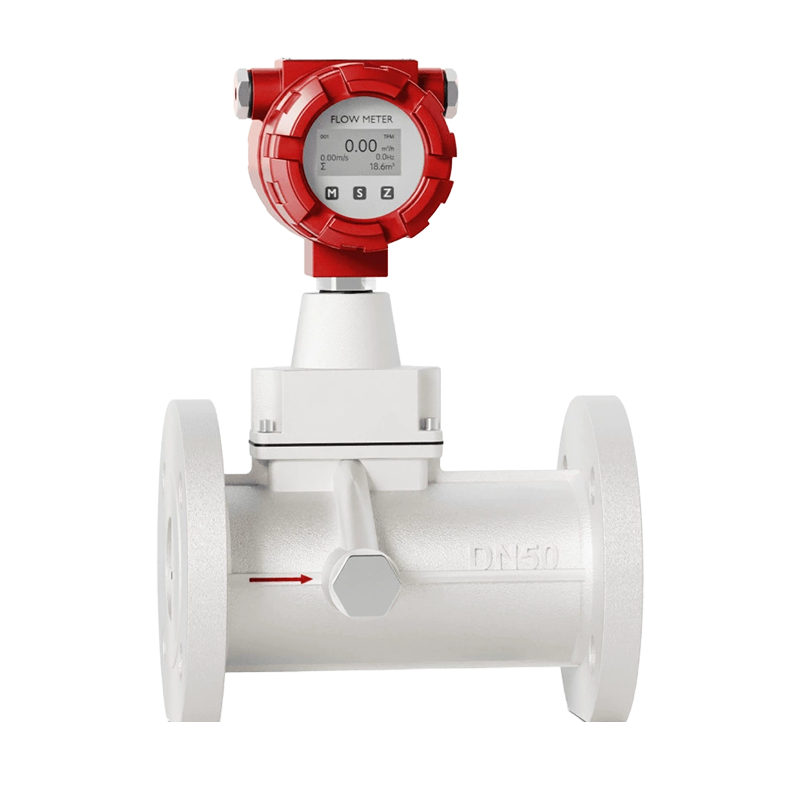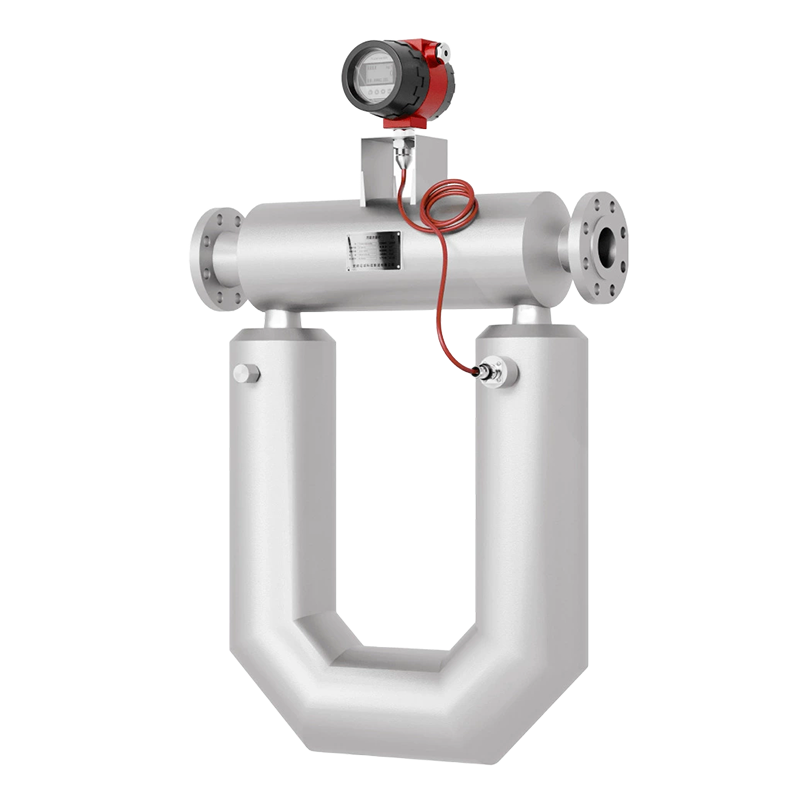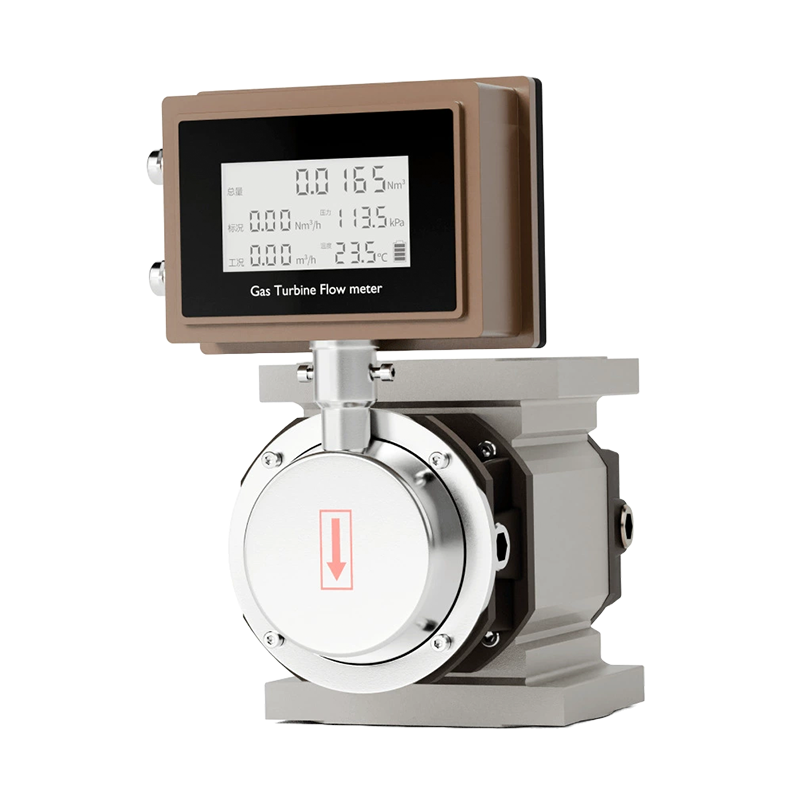
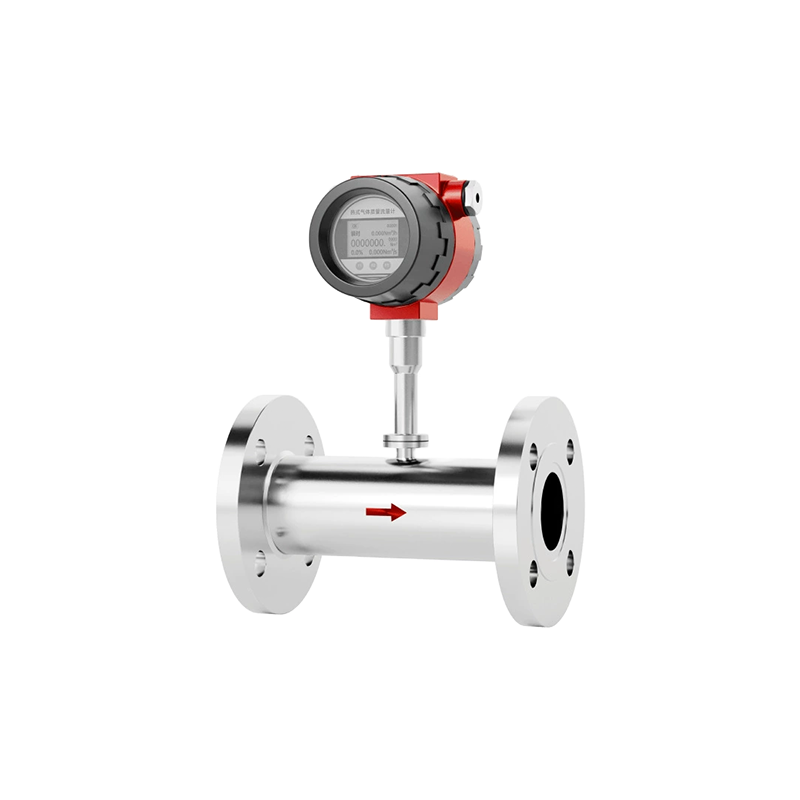
The thermal gas mass flow meter is designed based on the principle of thermal diffusion. This instrument uses the constant temperature difference method to accurately measure gases. It has advantages such as small size, high degree of digitization, convenient installation, and accurate measurement. The sensor part consists of two reference-grade platinum resistance temperature sensors. During operation, one sensor continuously measures the medium temperature T1; the other sensor self-heats to a temperature higher than the medium temperature T2 and is used to sense the fluid velocity, called the velocity sensor. The temperature ΔT = T2 – T1, where T2 > T1. When fluid flows through, gas molecules collide with the sensor and carry away the heat of T2, causing the temperature of T2 to drop. To keep ΔT constant, the supply current to T2 must be increased. The faster the gas flow velocity, the more heat is carried away. There is a fixed functional relationship between the gas flow velocity and the increase in heat, which is the principle of constant temperature difference.
Thermal gas mass flow meters have the following technical advantages:
A true mass flow meter requires no temperature or pressure compensation for gas flow measurement, making it convenient and accurate. It can obtain the mass flow rate or standard volumetric flow rate of the gas.
With a wide measurement range, it can measure gases with flow rates from 120 Nm/s to 0.1 Nm/s, and can be used for gas leak detection.
Excellent shock resistance and long service life. The sensor has no moving parts or pressure sensing components, and is unaffected by vibration on measurement accuracy. Easy installation and maintenance. Installation and maintenance can be carried out without interrupting production, provided site conditions permit. (Special customization required) Digital design. Overall digital circuit measurement ensures accurate measurements and convenient maintenance. RS-485 communication enables factory automation and integration. Measurement of oxygen, nitrogen, hydrogen, chlorine, and multi-component gases. Measurement of blast furnace gas and coke oven gas. Measurement of natural gas, liquefied petroleum gas, flare gas, and other gas flow rates. Measurement of primary and secondary air flow rates in power plant blast furnaces. Measurement of flow rates in underground mine ventilation or exhaust systems. Flue gas measurement. Compressed air measurement.